
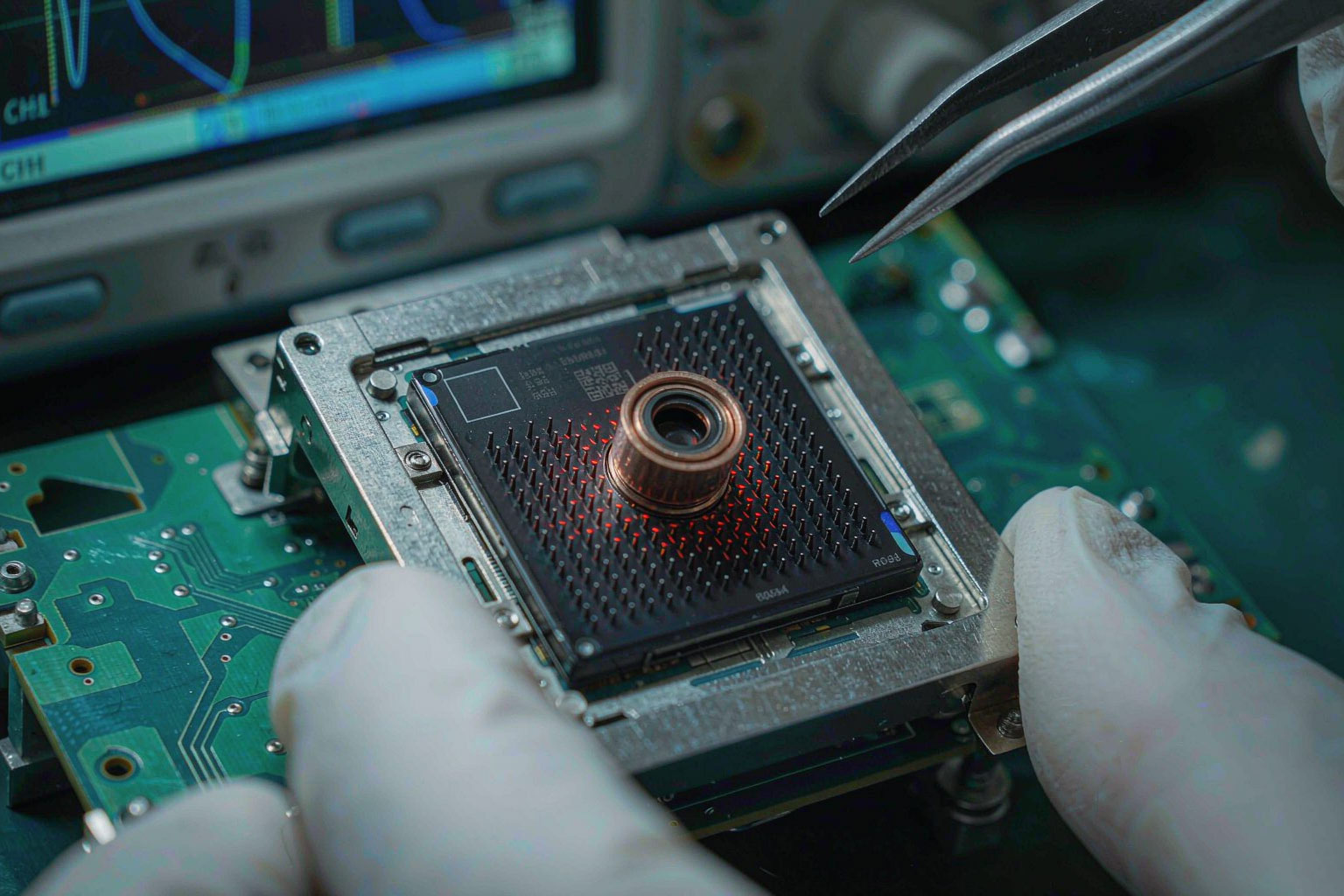
Open up any thermal imager — whether it’s a handheld monocular, a thermal scope, or an airborne infrared payload — and you’ll find one core component just a few centimeters square: the infrared module (also called the thermal core). Roughly 80% of the device’s overall image quality, power consumption, and size comes down to it. Understanding this “heart” is where understanding the entire thermal imaging industry begins.
1. What’s inside a module
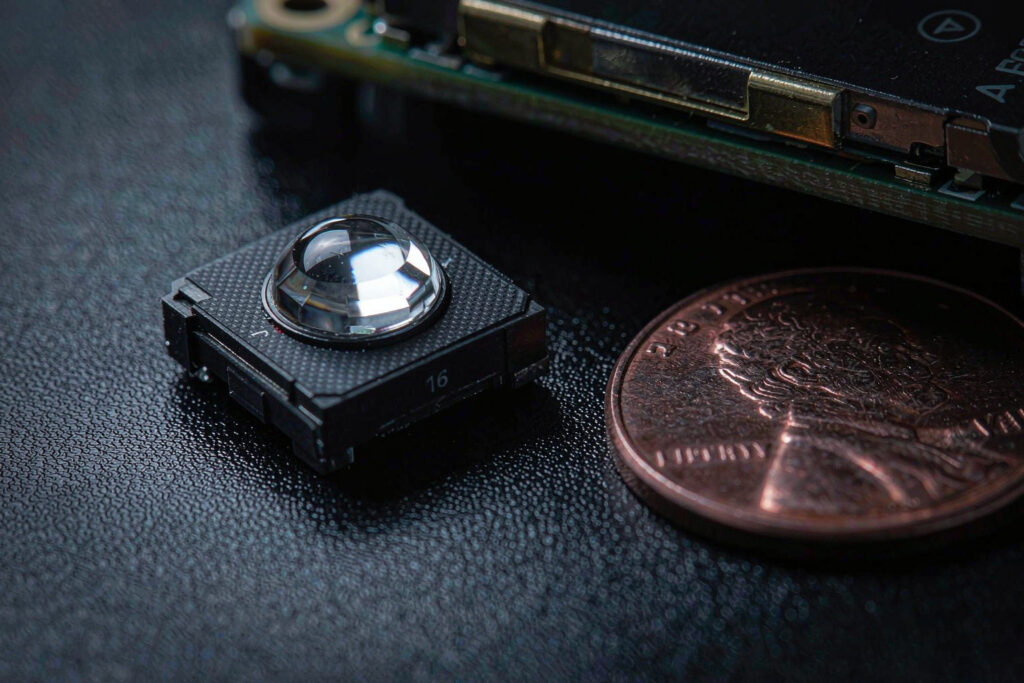
A complete infrared module typically contains four parts: the infrared detector (converts infrared radiation into electrical signals; mainstream types are uncooled vanadium oxide / amorphous silicon detectors with a 12μm pixel pitch), the infrared lens (germanium optics that determine field of view and detection range), the image processing circuitry (runs algorithms including non-uniformity correction, noise reduction, and enhancement), and the interface (outputs digital video and temperature data). When an OEM takes the module and adds a housing, screen, battery, and UI, the result is a complete product.
2. Why “uncooled” is a revolution
Early infrared devices required a cryocooler to bring the detector down to extremely low temperatures before they could operate — they were bulky, power-hungry, and priced in the hundreds of thousands. Uncooled detectors work at ambient temperature, pulling the cost, size, and power consumption of thermal imaging down by an order of magnitude. That is the only reason today’s miniature modules — 21×21mm, under 0.35W — can exist at all, and why new categories like consumer thermal imaging, airborne payloads, and smart doorbells became possible in the first place.
3. Three internal capabilities that decide image quality
NUC correction. Every pixel in a detector responds slightly differently, so continuous correction is required. Traditional mechanical-shutter correction freezes the image periodically; shutterless NUC corrects in real time via algorithms, keeping the image continuous and uninterrupted — the key for continuous monitoring and mobile platforms.
Noise reduction and enhancement. 3DNR suppresses image noise, and intelligent detail enhancement restores target edges — with the same detector, different algorithms produce images that are worlds apart.
Temperature compensation. Changes in ambient temperature cause the image to drift; real-time compensation keeps both image quality and temperature measurement stable through extended operation.
4. Why OEMs are starting to “buy cores directly”
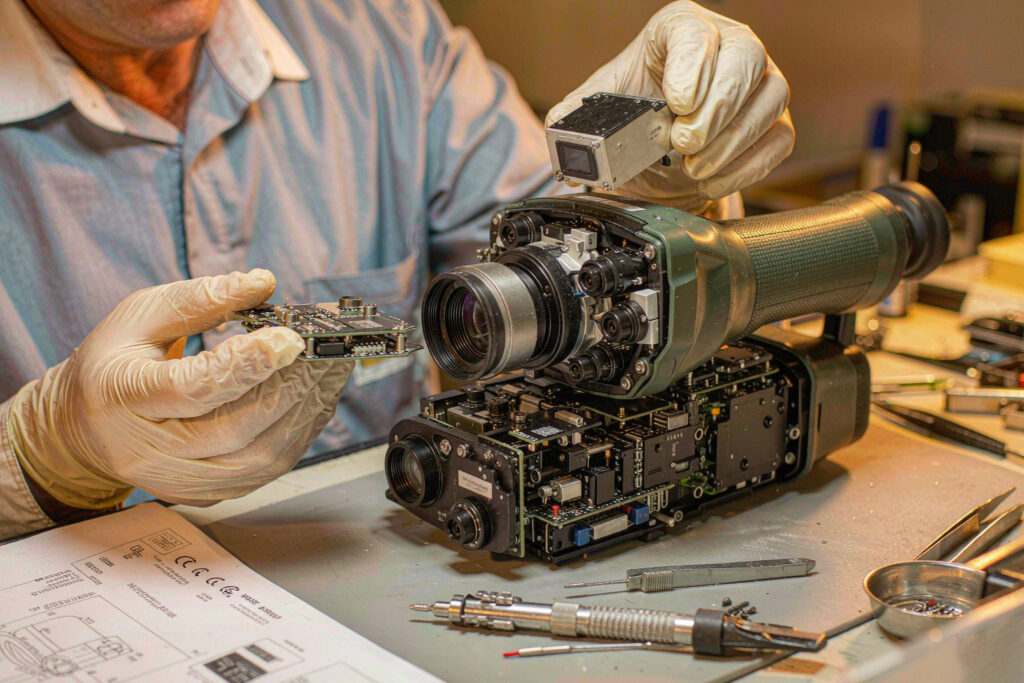
Developing a core in-house requires a full stack of capabilities — detector selection, readout circuitry, image algorithms, and calibration — a process measured in years. Sourcing a mature module turns all of that into “selection + integration”: modules with embedded algorithms eliminate image-pipeline debugging, bare-core supply gives maximum freedom in mechanical design, and a complete device project can be compressed from kickoff to mass production within a year. That is why the line between “core makers” and “device makers” is becoming increasingly clear.
5. Where the module is headed next
The industry’s evolution path is clear: smaller pixels (12μm → 8μm), smaller size, lower power, shutterless becoming the standard, and more AI capability moving into the core. Infrared modules are repeating the path that visible-light CMOS modules already walked — once highly standardized, “temperature sensing” across every industry will become as ubiquitous as cameras are today.