
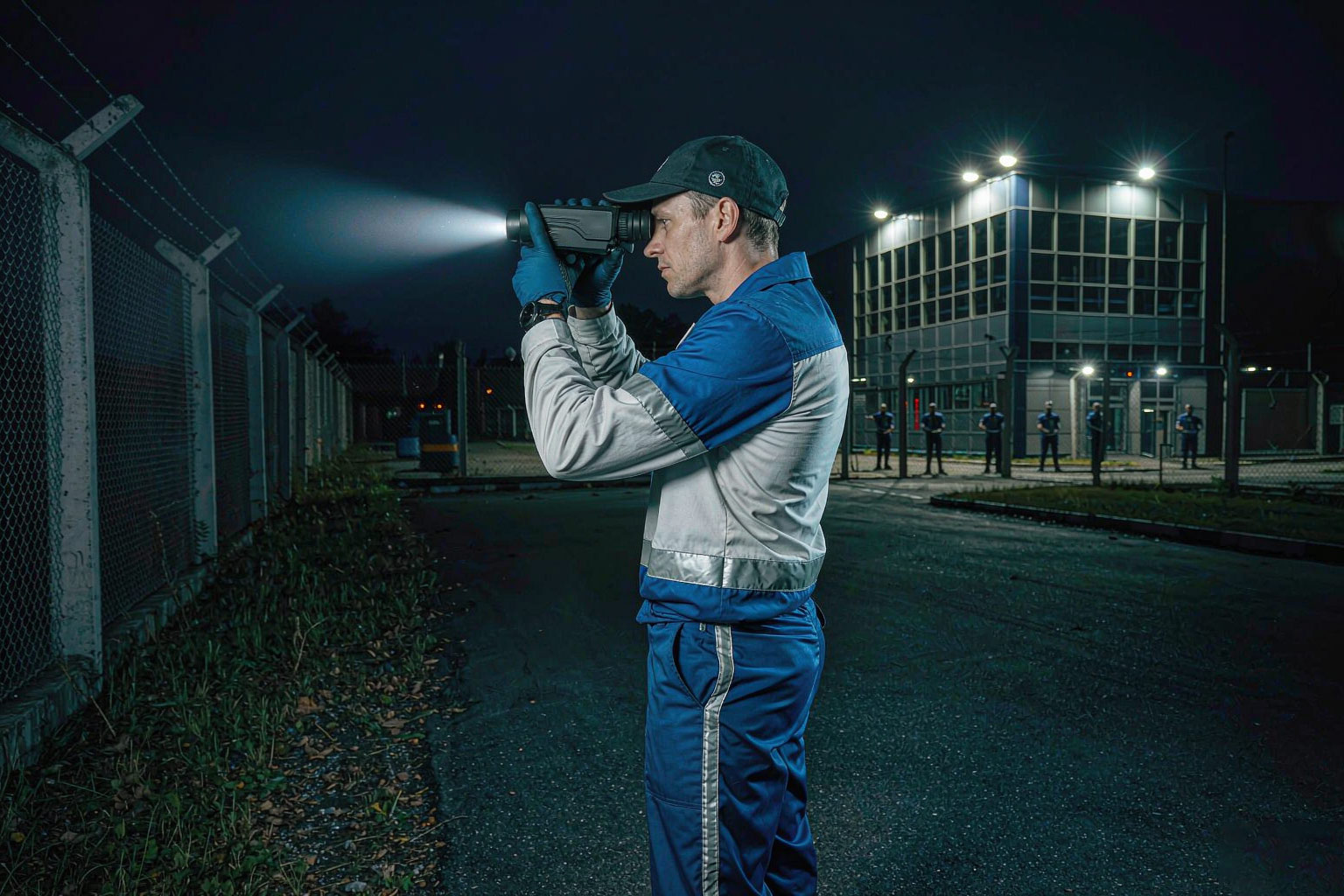
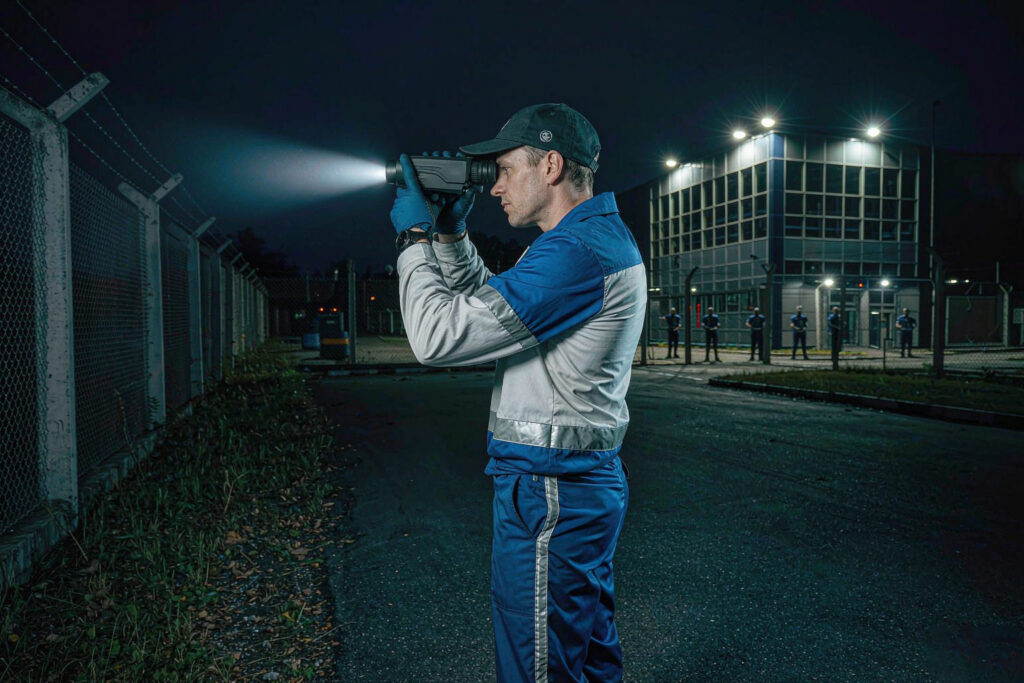
Many industrial parks, farms, estates and warehouses share a common experience: dozens of surveillance cameras installed, yet night-time intrusions are still only discovered after the fact — by reviewing recorded footage. The problem is not the number of cameras, but the underlying principle. Visible-light surveillance has inherent blind spots under low light, backlight, rain, fog and concealed obstruction. Handheld thermal imaging is emerging as the go-to “blind-spot filler” for perimeter patrols.
1. Three Nighttime Blind Spots of Conventional Surveillance
Total darkness and low light: Infrared-illuminator cameras have a limited effective range — beyond the illumination reach, the image is essentially useless. And that’s exactly what intruders without lights exploit.
Harsh weather: Rain, fog, and haze severely attenuate visible light and near-infrared illumination, turning surveillance footage into a washed-out gray blur.
Fixed viewpoints: With cameras in fixed positions, wall corners, areas behind bushes, and cargo shadows become natural dead zones — an intruder can easily observe and route around them.
2. Why Thermal Imaging Detects Threats First
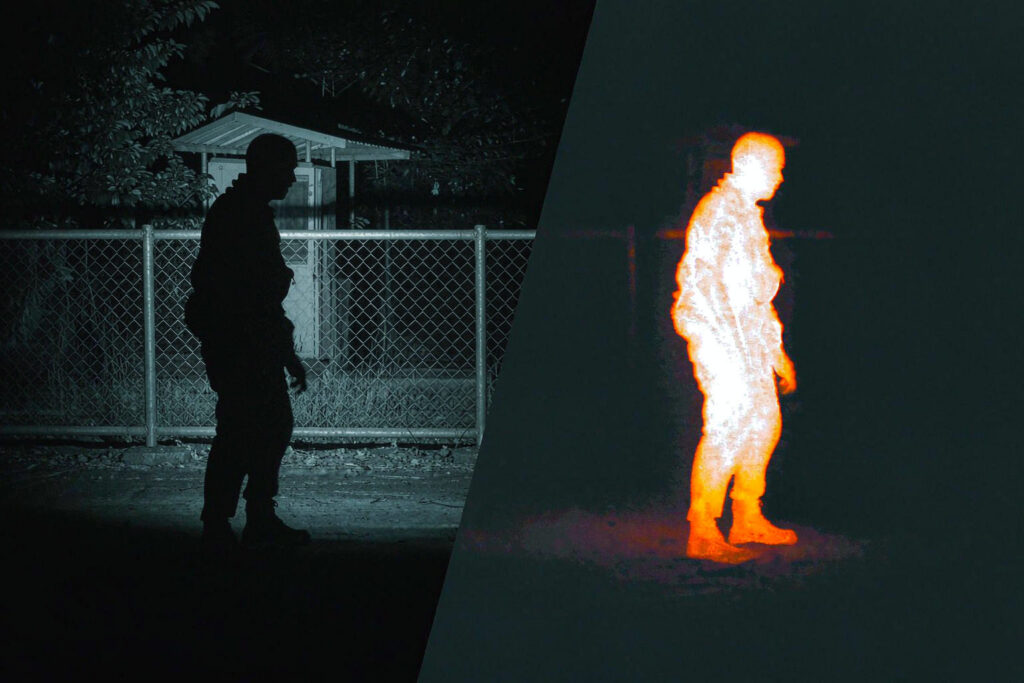
The human body is a stable 37 °C heat source that continuously radiates infrared under any lighting conditions. Thermal imaging works on passive temperature-difference detection — it requires no illumination at all. In total darkness, heavy smoke, rain, or fog, it can “lift” a human figure out of the background. As long as there’s a temperature difference between the body and the environment, a person — whether in dark clothing or lying low — appears as a conspicuous bright spot on the thermal image.
Compared with fixed cameras, a handheld thermal monocular travels with the patrol officer: the field of view moves with the person, leaving no blind spots. When a suspicious target is spotted, the operator can capture photos or video with one tap, creating evidence documentation on the spot.
3. Perimeter Patrol Selection: Three Hard Requirements
Detection range: Be clear on the difference between detection range and recognition range. You may spot a human figure from over a kilometer away, but confirming “person or animal?” requires a much shorter distance. Choose the objective lens focal length based on your actual perimeter width: 25 mm suits small-to-medium facilities, while 35 mm and above fits open farms and borderlines.
Battery life & protection: For all-night patrols, look for 10+ hours of battery life. For outdoor use, IP67 waterproof and dustproof is the minimum baseline — and in low-temperature regions, pay attention to the operating temperature range.
Evidence capability: Onboard recording and wireless image transfer to a mobile app turn “I saw something” into “I have proof” — critical for post-incident review and alarm integration.
4. Not a Replacement — a Complement
Thermal imaging does not replace surveillance cameras. Fixed cameras handle 7×24 continuous recording; handheld thermal imaging handles active night patrol and blind-spot coverage. Combined, they upgrade your operation from “review footage after the fact” to “detect threats before they happen.” For security companies, this is also a direct way to reduce labor costs and improve single-officer patrol efficiency.
ELUNIT handheld thermal monoculars cover the full resolution range from 256 to 1280, support video evidence capture and App-based wireless image transfer, and are widely adopted by overseas farm, estate, and facility security teams. Contact us for a perimeter security selection solution.