
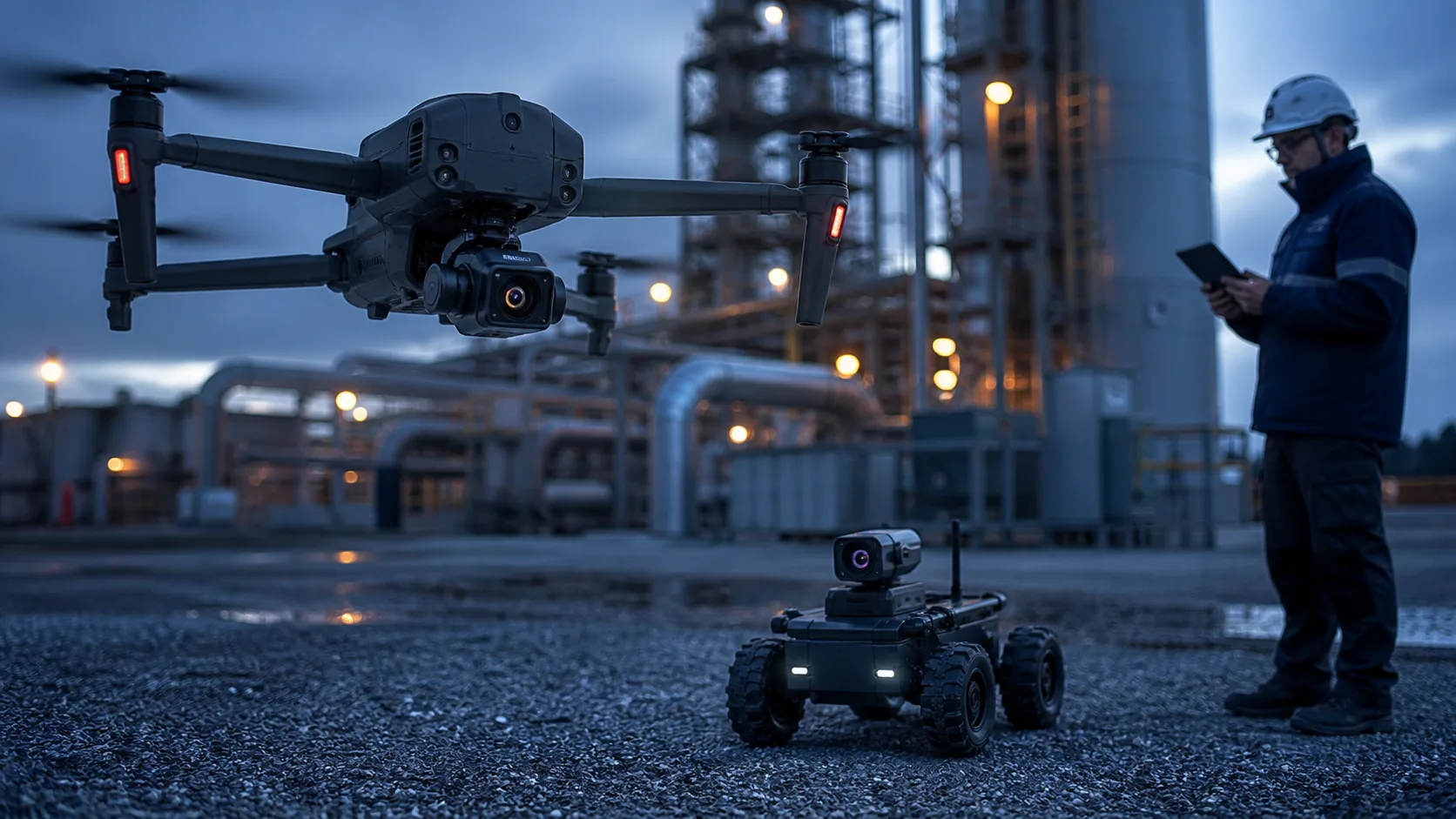
Inspection drone and ground robot equipped with compact thermal cameras

Intelligent sensing

Drones, Robotics & Autonomous Systems

Explore compact thermal imaging for drones, robots, autonomous systems, smart agriculture, inspection platforms, and embedded machine vision.

Application overview

How thermal imaging supports Drones, Robotics & Autonomous Systems

Compact thermal cores add heat-based perception to aerial, ground, and autonomous platforms. Integration decisions include payload size, weight and power, video latency, interfaces, radiometry, optics, stabilization, processing resources, and the operating environment.

Typical use cases

Where the technology is applied

  • Aerial inspection of buildings, utilities, solar fields, and infrastructure
  • Ground robots for industrial monitoring and hazardous-area observation
  • Autonomous perception, navigation support, and low-light awareness
  • Smart agriculture, livestock observation, and remote facility inspection

System selection

Key technical factors

  1. 01Size, weight, and power (SWaP)
  2. 02Video latency and frame rate
  3. 03Digital video and control interfaces
  4. 04Radiometry and calibration
  5. 05Optics, stabilization, and processing platform

Frequently asked questions

Questions about Drones, Robotics & Autonomous Systems

What thermal camera is suitable for a drone?

A drone payload usually prioritizes low weight and power, compact optics, suitable resolution and field of view, low video latency, vibration-aware mounting, and an interface compatible with the flight or payload computer.

Do robotic thermal systems need radiometry?

Radiometry is important when the robot must measure or trend temperature. Navigation and detection tasks may instead prioritize sensitivity, latency, field of view, and reliable image output.

Can thermal imaging be combined with AI vision?

Yes. Thermal video can be processed alongside visible, depth, radar, or other sensor data. The system design should define synchronization, calibration, data format, compute budget, and validation for the target environment.

Build the right thermal system

Discuss your application with Blunith.

Share the target, distance, environment, product format, technical requirements, and expected volume.

Start an Engineering Inquiry