
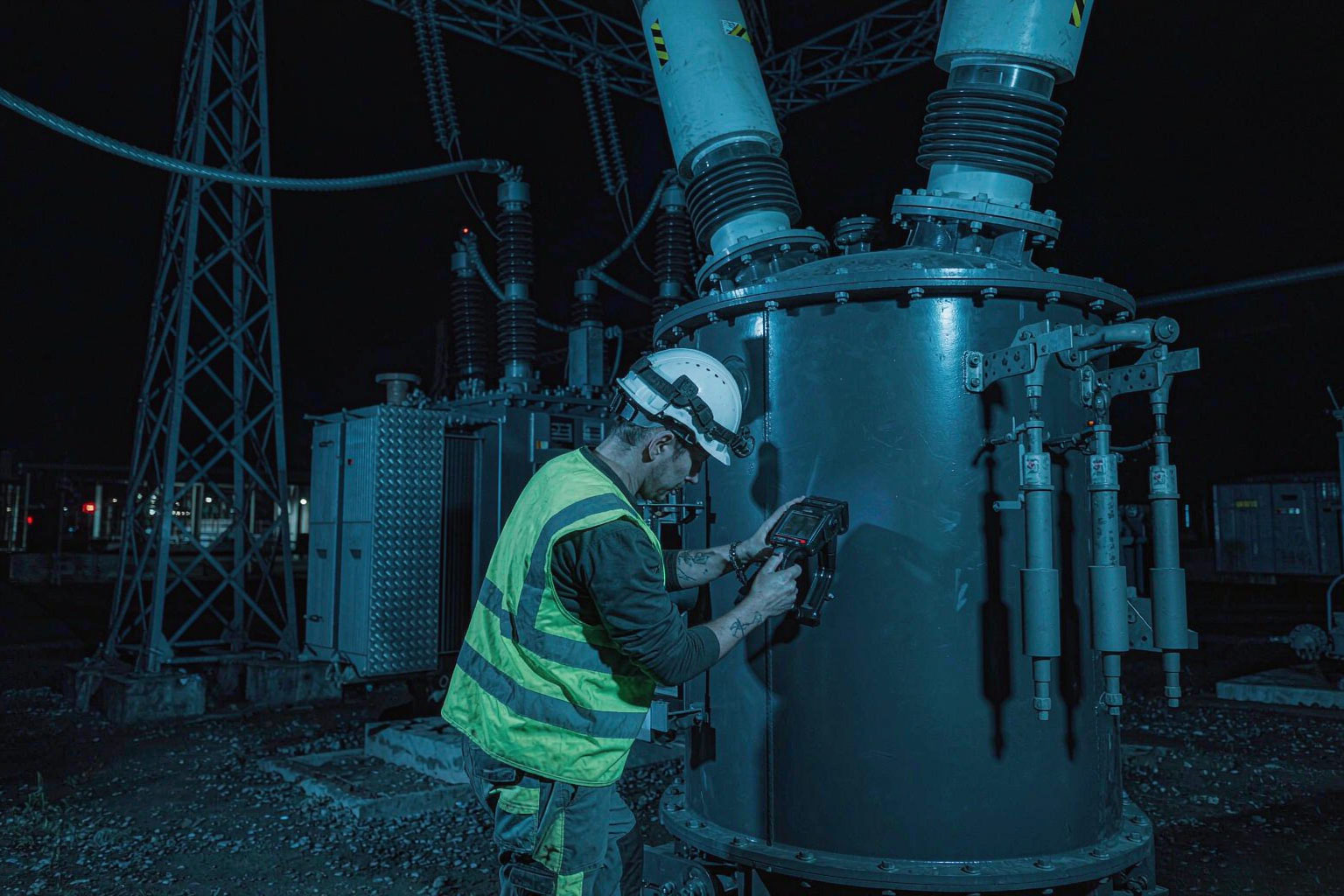
Equipment overheating is the most common early warning sign of electrical and mechanical failures in factories. Loose circuit breaker connections, worn motor bearings, and aging transformer windings all share one telltale symptom before they fail completely: abnormal temperature rise. Traditional inspection relies on touch, listening, and visual checks — but by the time a problem is detected, it’s often too late, resulting in downtime or even fire. The value of a thermal imaging retrofit is simple: it shifts your strategy from “repair after failure” to “early warning at first sign of heat.”
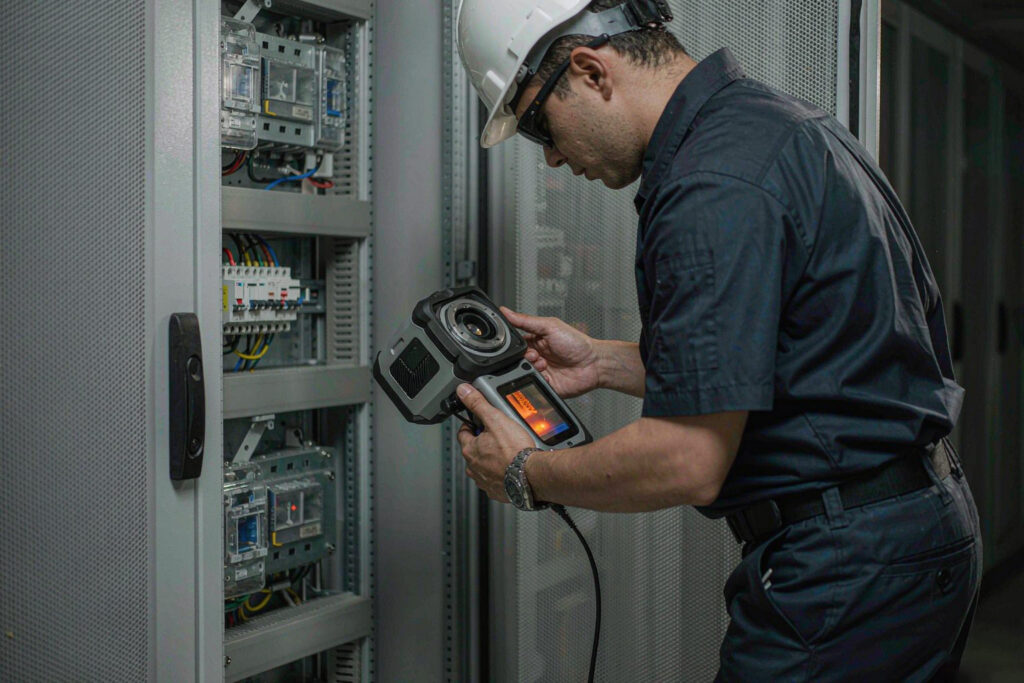
I. Why Temperature Is the Most Reliable Early-Warning Indicator for Faults
Increased resistance at electrical connection points, lubrication failure in mechanical components, and load imbalance all directly translate into heat. Industry experience shows that a large number of electrical fires and unplanned shutdowns are preceded by measurable temperature rises weeks or even months in advance.
Infrared thermal imaging operates on the principle of passive temperature-difference imaging. It is non-contact, requires no shutdown, and does not disrupt production. A single scan can cover an entire cabinet or a full production line, making it one of the most cost-effective predictive maintenance solutions available today.
II. Which Scenarios Deserve Priority Upgrade
Power Distribution Systems High- and low-voltage distribution cabinets, circuit breakers, busbar joints and cable terminations are the areas with the highest concentration of overheating hazards — and the scenarios where thermal imaging delivers the highest detection hit rate.
Rotating Machinery For motors, pumps and fans, temperature anomalies in bearings and couplings typically appear earlier than vibration anomalies.
Pipelines & Valves Damaged insulation on steam pipelines, internal valve leakage and failed steam traps are all instantly visible on thermal imagery.
Night-Time & Unmanned Shifts Many overheating issues only surface under low-load or specific operating conditions. Night-time inspections and online monitoring fill the blind spots left by daytime shifts.
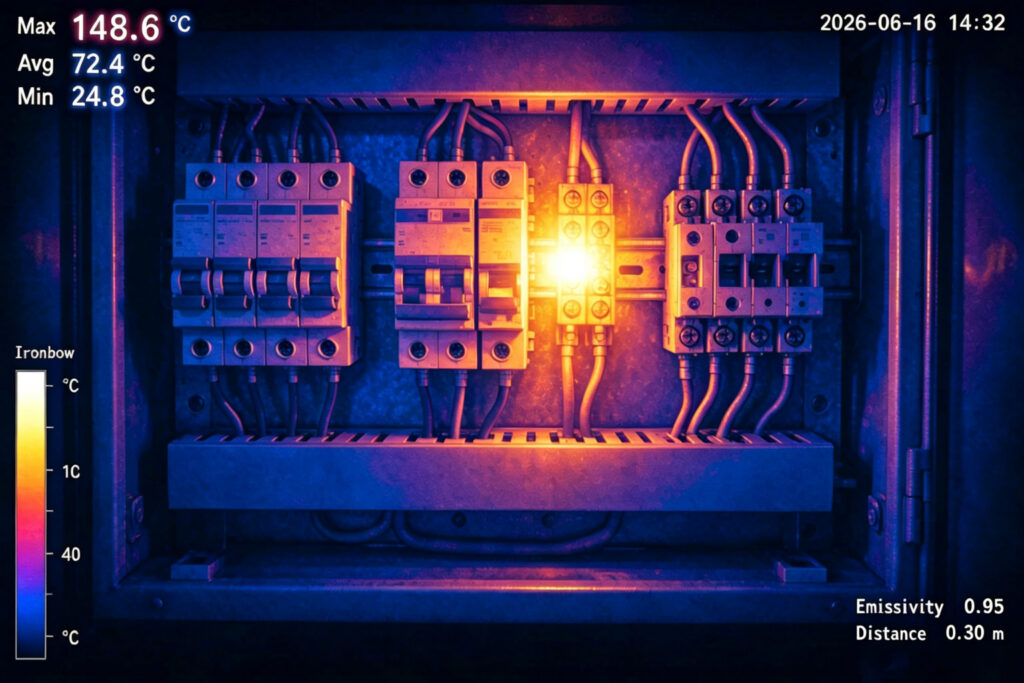
3. Retrofit in Practice: Handheld Inspection vs. Online Monitoring
Handheld thermal cameras (or thermal monoculars) suit plants that rely on shift-based inspection: low investment, high flexibility — a single inspector can cover all critical points across the plant. When selecting, prioritize thermal sensitivity (NETD ≤ 25 mK for better accuracy), resolution (256×192 as a starting point; 384×288 or above for long-distance, small targets), and support for photo/video capture for documentation.
Online IR modules suit critical equipment requiring 7×24 monitoring: embed an uncooled infrared module at a fixed position, integrate it into your existing surveillance system, set temperature thresholds, and it alerts automatically. Modules with shutterless NUC correction and ultra-low power consumption (<0.35 W) can run maintenance-free all year round — ideal for unattended substations and high-risk areas.
For most plants, the practical path is “handheld first, online second”: use a handheld device to map the heat distribution across the plant, then deploy online monitoring on high-risk points — the highest return on investment.
4. The Cost Equation
A single unplanned downtime can cost tens of thousands of yuan in losses — and an electrical fire is truly incalculable. Yet a plant-wide handheld thermal inspection solution often costs less than one-tenth of one moderate downtime event. A thermal retrofit isn’t “buying equipment”; it’s buying low-cost insurance for your production line.
ELUNIT offers complete temperature monitoring solutions, from handheld thermal cameras to OEM infrared modules, customizable to your industry scenario. If you’re evaluating a plant thermal retrofit, contact our technical team for selection guidance.