
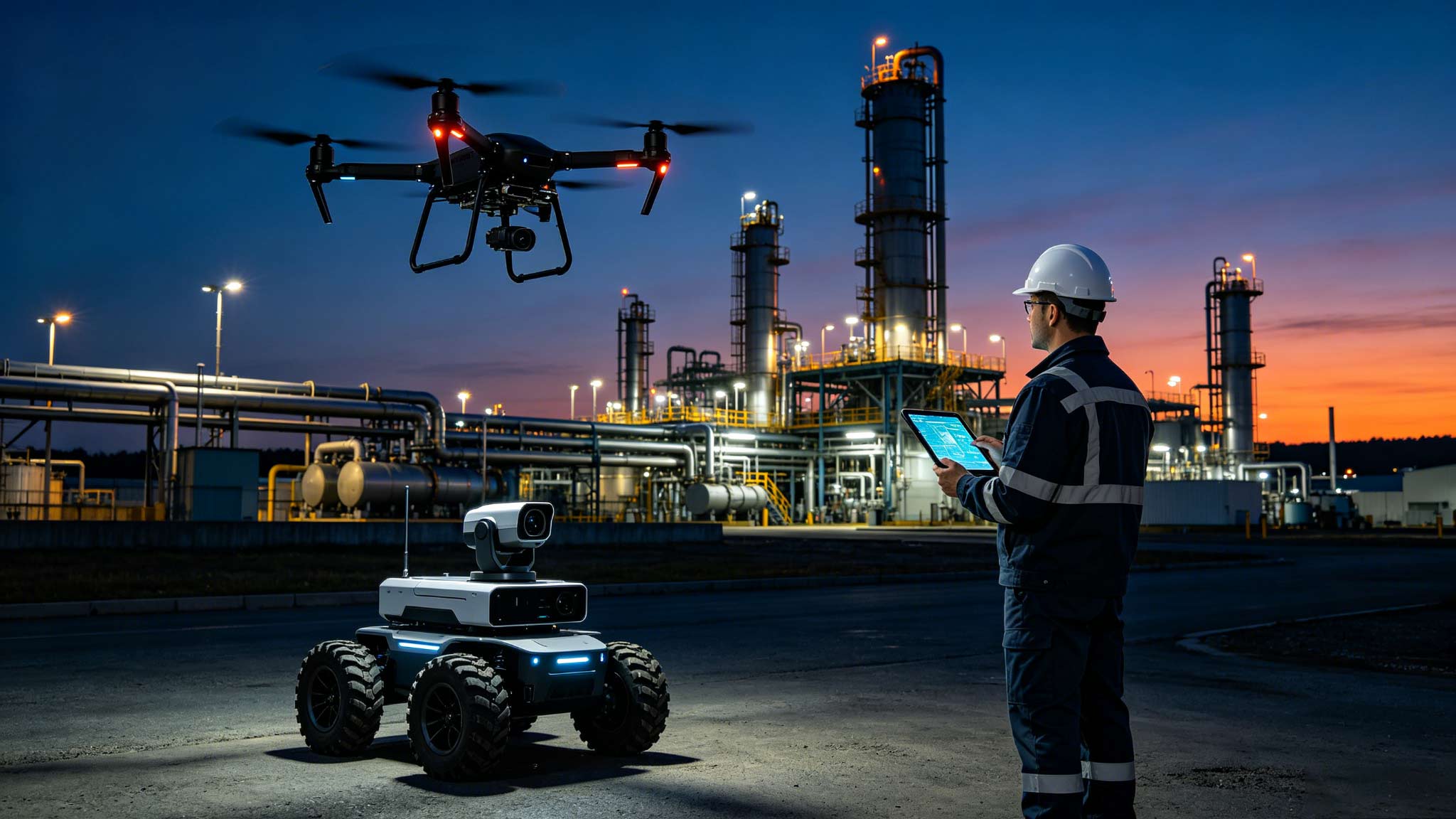
At night, in smoke-filled plants, or inside unlit spaces, the visible-light cameras on aerial and ground inspection platforms often can’t see anything. Thermal imaging solves this: it detects the infrared heat every object emits, with no ambient light required. Autonomous systems equipped with compact thermal modules can clearly identify heat targets in complete darkness, smoke, and haze.
How Thermal Imaging Lets Autonomous Inspection Systems “See”
Compact thermal modules integrate infrared sensors into aerial and ground platforms, working alongside visible-light cameras and LiDAR. Visible light handles detail; thermal handles “seeing when you can’t see” — a person in the dark, an overheated component, or a temperature difference from a pipeline leak all stand out instantly.
Key Applications
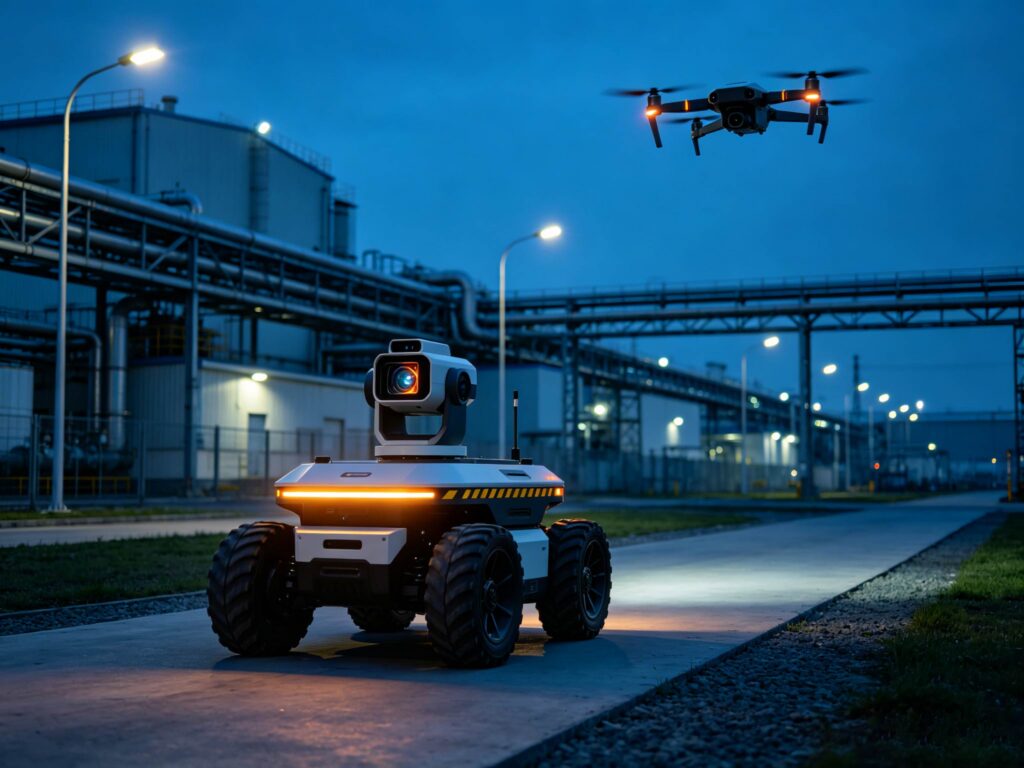
- Aerial inspection — power lines, solar farms, petrochemical and energy facilities; detect hot spots, electrical faults, and pipe anomalies fast
- Robot patrol & inspection — autonomous rounds in plants, parks, and warehouses, identifying people, vehicles, and abnormal heat sources
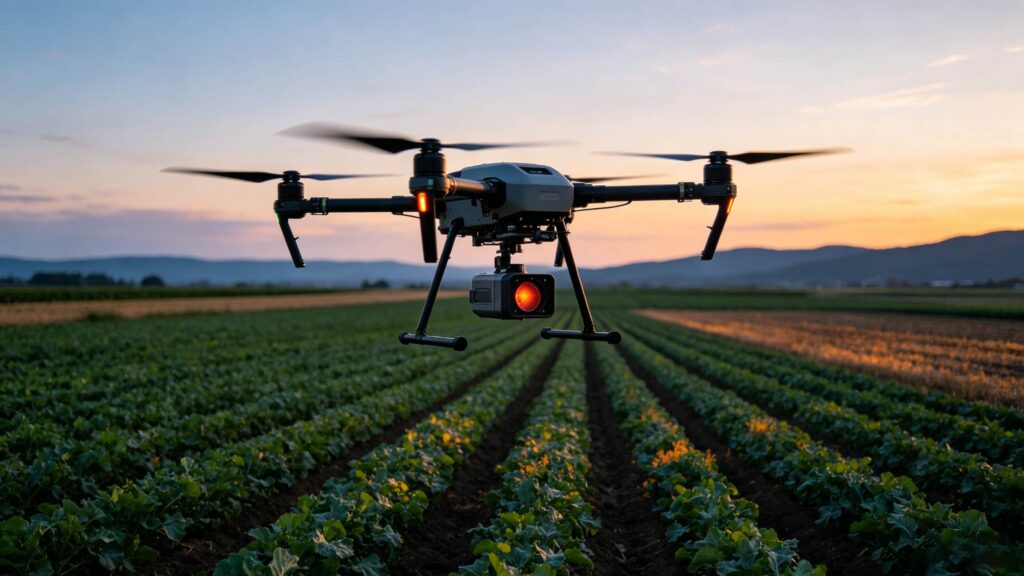
- Smart agriculture — crop health monitoring and livestock observation by heat signature, day or night
- Embedded machine vision — security monitoring, people detection, and fire reconnaissance
- Post-disaster reconnaissance — aiding search and assessment in smoke and darkness
Advantages of Compact Thermal Modules
- Small and lightweight — fits airborne payloads and robot structures without compromising mission endurance
- Low power — supports long autonomous missions
- Easy integration — standardized interfaces for connecting to visible-light systems, AI algorithms, and flight control platforms
- All-weather operation — unaffected by day/night changes, expanding the mission window

What to Consider When Choosing a Thermal Module
- Resolution & sensitivity — determines the smallest, farthest heat target you can identify
- Size & weight — directly affects airborne endurance and robot design
- Interfaces & compatibility — how easily it connects to existing control and data platforms
- Power & thermal management — stability over long continuous operation
- Ingress protection — survival in dust, rain, and temperature extremes
FAQ
Can thermal imaging work on night aerial inspection missions? Yes — thermal sensing needs no light, making it a key complement for night navigation and target detection.
How do thermal and visible-light cameras work together? Usually as a fused solution: visible light provides detail, thermal adds detection capability in darkness and smoke.
How do you integrate thermal imaging into a robot? Compact modules connect via standard interfaces to the robot’s vision and control platform, enabling automated detection and alerts with AI.
About PACECAT: Compact infrared thermal imaging modules and handheld devices for aerial inspection, robotics, smart agriculture, inspection platforms, and embedded machine vision.